How do you read a water heater’s age from its label?
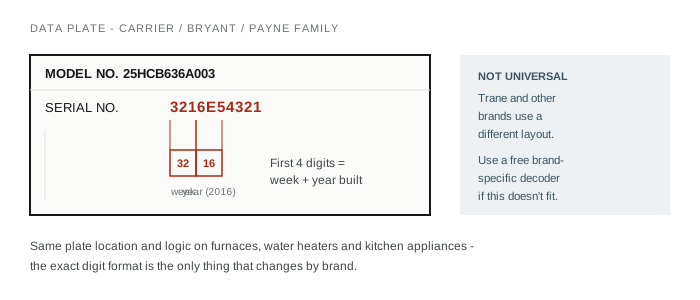
This is the same encoding logic used on HVAC equipment, because a lot of water heater and furnace brands share manufacturing conventions. If the four-digit shortcut doesn't line up, a free decoder tool (the same ones useful for HVAC) will cover most major brands from the full serial number.
How long does a water heater last?
A standard tank water heater lasts 10 to 15 years. Past that window, the tank itself, not just the heating element, is the aging part, and tanks fail by leaking, not by a gradual decline you can plan around.
That's the practical difference between a water heater and almost everything else on this checklist. A furnace or a roof degrades gradually and gives you warning signs for years. A tank water heater tends to work fine until it doesn't, and when it fails it's usually a leak, sometimes a fast one. Age alone, past 10 years, is a real reason to budget for replacement even with no other symptoms present.
What warning signs mean a water heater is near failure?
Rust at the tank or fittings, red or rust-colored hot water, popping or rumbling noises, and moisture around the base are the four things to check. Rust and moisture are the two that matter most, since both mean the tank itself is already compromised.
| What you see | What it means | Typical cost | Verdict |
|---|---|---|---|
| Rust or corrosion at the tank or fittings | Tank is failing from the inside; visible rust means it’s already advanced | $800 - $1,900 to replace | price |
| Red or rust-colored hot water | Internal corrosion, likely near end of tank life | $800 - $1,900 to replace | price |
| Popping or rumbling sounds | Sediment buildup at the tank bottom, reduces efficiency and life | Flush $100 - $200, or ignore and replace sooner | note |
| Moisture or staining on the floor around the base | Active or past leak | Replace immediately, $800 - $1,900 | walk |
| Unit is 10+ years old per the data plate | Inside the typical replacement window | Budget $800 - $4,500 depending on type | price |
Popping or rumbling is the odd one out on this list. It means sediment has built up at the bottom of the tank, which is common and not urgent by itself, a flush can help, but it's also a sign of a unit that hasn't been maintained, which is worth factoring into how much you trust everything else about the house's mechanical history.
Where do you look for evidence of past leaks?
Check the floor directly around the base of the tank for staining, warping, or a slightly different color than the surrounding floor. A past leak that was cleaned up still usually leaves a mark on wood, laminate or drywall nearby.
Water heaters are almost always installed in a garage, closet, basement or utility room, so the surrounding material is often something other than tile, which shows water damage more visibly than a bathroom would. If the water heater sits on a floor above living space, also glance at the ceiling directly below it on your way through the house.
Questions buyers ask
- Where is the serial number on a water heater?
- On the manufacturer’s data plate on the side of the tank, always visible without removing anything. Most brands encode the manufacture week and year in the first four digits, the same pattern used on HVAC equipment.
- Is a rusty water heater a deal-breaker?
- Not automatically, but visible rust means the tank is already corroding from the inside, and tanks don’t un-corrode. Treat it as a near-term replacement cost to negotiate, not a reason to walk on its own.
- How much does a tankless water heater cost?
- A gas tankless unit installed runs $2,000 to $4,500, and an electric tankless runs $1,500 to $3,000. Converting from a tank system can add cost for gas line or electrical service upgrades.
- Who pays to replace a water heater found during inspection?
- It’s a negotiation, not a rule. Buyers commonly ask for a repair credit or a price reduction rather than requiring the seller to install a new unit themselves, since sellers tend to pick the cheapest available option.
Related checks
Cost figures: Angi, Paul Bunyan Plumbing, Arch Elec/HVAC and Woods Comfort Systems 2026 pricing guides. Age-decoding logic shared with the HVAC page's building-center.org and hvacbase.org sources. Figures are national averages current as of September 2026.