What can you check yourself before paying for an inspection?
Everything visible without opening a panel or a wall: roof condition from the ground, system ages from data plates, water pressure and drainage, foundation and structural warning signs, pest evidence, and basic safety items. That's most of what separates an obviously fine house from an obviously troubled one.
It's not everything a professional catches, and this site says so repeatedly rather than once in the fine print. What it is: the fastest, cheapest way to stop spending time and money on houses you'd walk away from anyway once a real inspector got involved.
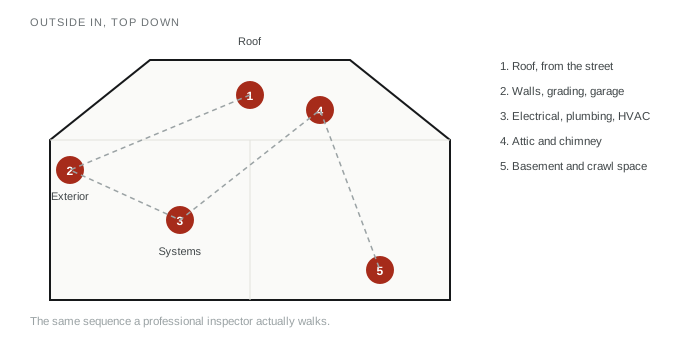
How long does a walkthrough check take?
Fifteen to twenty minutes for a house you're seriously considering, faster if you're just ruling a house out. That's longer than most buyers currently spend looking past the kitchen and the paint color, and shorter than the time you'd lose making an offer on a house with a problem you could have caught for free.
What does this checklist deliberately not cover?
Anything that requires opening something, testing something under load for an extended period, or specialized equipment: refrigerant charge, sewer line condition, septic tank internals, radon levels, and confirmed asbestos or lead content. Those need a professional or a specialty inspection, not a buyer with a flashlight.
When should you stop and call a professional?
The moment you hit a finding tagged Walk on this checklist, or when several Price-tier findings stack up across different systems. One aging water heater is a negotiation. An aging water heater, a 20-year-old roof and a sticking door with a matching frame crack is a house that needs an inspector's opinion before it needs your offer.
A walkthrough check screens out obvious problems before you spend money finding out the hard way. It is not a substitute for a licensed home inspector, and nothing on this site should be read as one. Book a professional inspection on every house you make an offer on, full stop. The goal here is to stop wasting that inspection on houses that never had a chance.
Questions buyers ask
- Can you inspect a house yourself?
- Yes, for what’s visible. You can check a roof from the sidewalk, read data plates for system age, test outlets, and look for water, pest and structural warning signs. You can’t open an electrical panel, measure refrigerant charge, or see inside a wall, which is what a licensed inspector is for.
- Does a walkthrough replace a home inspection?
- No, and this site says so on every guide. A walkthrough screens out the obvious problems before you spend $300 to $450 on a professional inspection you didn’t need. It doesn’t replace the inspection on a house you’re actually about to buy.
- What should you bring to a house showing?
- A flashlight, an outlet tester, a moisture meter, a small level, your phone camera and a tape measure, all under $75 combined. The full breakdown, with what each tool actually catches, is on the toolkit guide.
- How much does a professional home inspection cost?
- The national average is $344, typically $296 to $424, more in high-cost states and for larger homes. Add specialty inspections, radon, sewer scope, termite, and a thorough buyer commonly lands around $1,200 total.
Start here
Inspection cost figure: Houwzer/HomeAdvisor 2026 national data, also cited on the after-the-offer guide. Every checklist item and per-system figure on this page is sourced individually on its own guide; see each system's page for full citations.