What should you bring to a house showing?
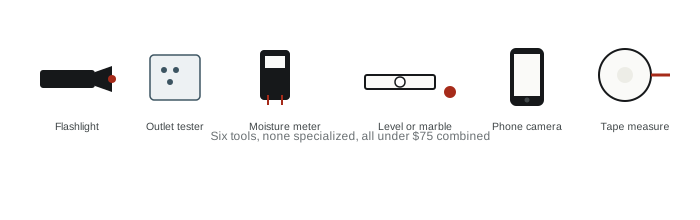
| Tool | What it detects | Cost |
|---|---|---|
| Flashlight or headlamp | Attics, crawl spaces, dark corners under sinks | $10 - $25 |
| Outlet tester | Dead ground, reversed wiring, even behind new-looking outlets | $10 - $20 |
| Pinless moisture meter | Wet drywall or wood without puncturing the surface | $17 - $56 |
| A small level or a marble | Out-of-level floors, a cheap proxy for foundation settling | $0 - $10 |
| Phone camera with zoom | Roof condition from the ground, data plates, anything overhead | Free |
| Tape measure | Whether furniture and layouts will actually work, not a defect check | $5 - $15 |
How does a marble or level detect a sloping floor?
Set it on the floor near the center of a room and watch what happens. In a level house it stays put or rolls a few inches. A fast, consistent roll toward one side means the floor isn't level, which can point at settling or a structural issue worth asking about.
A small torpedo level does the same job more precisely and isn't much more expensive. Either way, a little roll is normal, almost no floor is perfectly flat, and the point isn't to fail every house that isn't laser-level. It's to notice the house where a marble takes off across the room on its own, which is a genuinely different situation.
What does an outlet tester reveal?
A plug-in outlet tester checks for a dead ground, reversed wiring, and other basic faults in seconds, even at outlets that look completely normal or have been recently replaced. A modern-looking outlet tells you nothing about what's actually wired behind it.
Test a handful of outlets, kitchen, a bathroom, wherever you'll actually use them, rather than every outlet in the house. A pattern of faults across several outlets is a real signal about the home's wiring. One bad outlet in an otherwise clean set of results is a minor fix, not a structural finding about the whole electrical system.
When is a moisture meter worth carrying?
Anytime you're seriously considering a house, not just browsing. It turns "does this wall feel damp" into an actual number, and it's the fastest way to confirm or rule out a suspicious stain or musty smell without waiting for a professional inspection.
A pinless meter, the kind that reads through the surface without puncturing it, is worth the small price premium over a pin-type model. You're a guest in someone else's house, and you don't want to be the buyer who left small holes in a wall during a showing.
What is off-limits during a showing?
Anything that requires opening a panel, removing a cover, or physically altering something. Testing outlets and checking level is passive. Opening an electrical panel or pulling insulation back is not, and it crosses from buyer diligence into something your agent and the seller's agent will both object to.
Questions buyers ask
- Can you take photos during a house showing?
- Generally yes, and you should. Photograph data plates, anything you’d otherwise have to describe from memory, and anything you’re unsure about so you can research it later or show a contractor.
- Is it rude to test outlets during a showing?
- A handful of spot checks, not every outlet in the house, is normal and won’t slow down a showing. Testing all of them turns a 20-minute visit into an hour and will frustrate your agent and the seller’s.
- How much does a basic inspection toolkit cost?
- Under $75 covers a flashlight, an outlet tester, and a basic moisture meter, the three tools that do almost all the work on this site’s checklist. You don’t need a professional inspector’s kit.
- Can you enter a crawl space during a showing?
- Only with the agent’s permission, and only if you’re comfortable doing it. A flashlight aimed in from the entry point catches most of what matters, standing water, obvious damage, without you needing to crawl in.
Related checks
Tool pricing: Home Depot, Amazon retail listings for outlet testers and moisture meters, cross-checked against InspectAndTest and Bessemeter home-inspector tool guides for the professional-grade equivalents this site deliberately doesn't recommend. Figures current as of September 2026.