What can you see from an attic hatch?
With a flashlight from the hatch, you can see the roof deck from underneath, the depth and condition of the insulation, and any obvious staining, daylight, or pest activity. You don't need to enter the attic to catch most of what matters here.
| What you see | What it means | Typical cost | Verdict |
|---|---|---|---|
| Daylight visible through the roof deck | A gap or hole in the roofing, an active leak source | See the roof guide | walk |
| Dark staining or streaking on the underside of the roof deck | Past or active leak, or condensation from poor ventilation | Depends on source; verify with a moisture meter | price |
| Insulation looks thin, patchy or compressed | Below the recommended R-value, higher energy bills | $900 - $6,000 to add, by material and size | note |
| Soffit vents blocked by insulation | Airflow cut off; feeds ice dams and shortens roof life | Often a same-visit fix during insulation work | price |
| Signs of pests: droppings, chewed material, nesting | Active or past infestation in an area few buyers check | See the pests guide | price |
How do you judge insulation depth and condition?
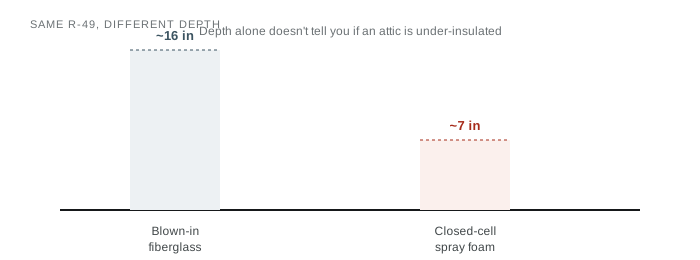
Depth alone doesn't tell the whole story, though. Energy Star's R-38 baseline needs roughly 10 to 14 inches of typical blown-in material, but the exact inches shift a lot by material. Spray foam hits the same R-value in less than half the depth of blown-in fiberglass, so a shallow-looking attic with spray foam isn't automatically under-insulated the way a shallow attic with blown-in material would be.
Which roof leaks show up in the attic first?
Any leak. The attic is the space between the roof and the living area, so water intrusion almost always marks the underside of the deck or the insulation below it before it ever reaches a ceiling stain visible from inside the house.
This is why an attic check belongs on this list even though the roof already has its own guide. You're not re-checking the roof, you're checking for evidence the roof has already failed somewhere, which is a different and more urgent finding than what you can see from the sidewalk.
What does attic ventilation tell you about a roof’s remaining life?
Good ventilation, soffit vents at the eaves paired with a ridge or gable vent, can add 5 to 10 years to a roof's life by reducing thermal stress. Blocked soffit vents, often buried under insulation, cut that airflow off and accelerate wear from the inside.
What are the signs of past fire or pest activity?
Charring or scorched wood, even old and repaired, is worth asking about directly. Droppings, chewed insulation, or nesting material point at rodents or other pests using a space that few buyers ever actually look into.
Questions buyers ask
- How much insulation should an attic have?
- Energy Star recommends R-38 for most attics, roughly 10 to 14 inches of material, with colder climates needing R-49 to R-60. The exact inches needed depend heavily on material: blown-in fiberglass needs about 16 inches to hit R-49, while closed-cell spray foam needs only about 7.
- Is it safe to enter an attic during a showing?
- Looking in from the hatch is enough for most of what this guide checks. Full entry means walking only on joists or a walkable floor if one exists, since stepping between joists can put a foot through the ceiling below.
- What does attic mold indicate?
- Almost always excess moisture from a leak, condensation, or blocked ventilation, not from anything happening inside the living space below. Attic mold is worth investigating specifically as a roof and ventilation issue, not treated the same as bathroom mold.
- What does adding attic insulation cost?
- Roughly $1,000 to $2,700 for a typical attic, or $1 to $3 per square foot, with the material chosen (blown-in versus spray foam) driving most of the difference in price.
Related checks
Insulation cost and R-value figures: Angi, HomeGuide, HomeCostLab, EcoWatch and Energy Star/DOE guidance via InsulationRValues.com. Ventilation-lifespan figure shared with the roof guide on this site. Figures are national averages current as of September 2026.