What does cupping or gapping in hardwood floors mean?
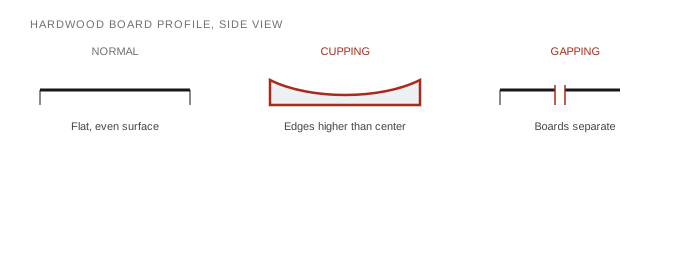
Both are visible without any tool. Sight down a hardwood floor at a low angle, the way light catches a cupped board is more obvious from the side than looking straight down. Neither symptom tells you the cause by itself, but cupping specifically is worth checking against what's happening in the basement or crawl space below that room.
How do you spot water damage in hardwood floors?
Look for staining, warping, or planks that bow or splinter, concentrated near a bathroom, kitchen, or exterior door. Isolated damage near a specific fixture points at a specific, findable source rather than a house-wide moisture problem.
| What you see | What it means | Typical cost | Verdict |
|---|---|---|---|
| Hardwood edges higher than the center (cupping) | Moisture imbalance; a symptom, not the root cause | $1 - $8/sq ft to repair | price |
| Wide gaps between hardwood boards | Humidity swings; often cosmetic, sometimes chronic | $7 - $15/sq ft to repair | note |
| Straight-line cracks across many floor tiles | Subfloor or foundation movement, not routine tile aging | See the structure guide first | walk |
| A grout crack that reopens after repair | The assembly is still actively moving at that spot | Structural evaluation before re-tiling | walk |
| Water staining or warping near a bathroom or kitchen | Active or past leak reaching the flooring | $8 - $100/sq ft depending on severity | price |
What does a cracked tile floor actually tell you?
Grout cracks because whatever is underneath the tile moved, or because the installation itself was weak. A single small crack is often installation quality. Widening grout lines or a straight-line crack running across many tiles is a different, more structural signal.
Straight cracks across multiple tiles and grout that reopens on the same line after a repair are both classic signs of ongoing subfloor or foundation movement, not tile aging. If you see this pattern, read the structure guide on this site next, this page is telling you where to look, not giving you the full diagnosis.
What does floor repair or refinishing cost?
Refinishing hardwood runs $3 to $8 per square foot. Cupping repair runs $1 to $8 per square foot, and gapping repair runs $7 to $15 per square foot. Genuine water damage reaching the subfloor pushes past $2,000 to $4,000 for that area alone.
Why does fixing the floor without fixing the cause not work?
Because the floor was reacting to something, moisture, movement, humidity, and refinishing or releveling only resets the symptom. Without removing the actual cause, the same distortion returns, often within months, which means you'd be paying for the same repair twice.
Questions buyers ask
- Can cupped hardwood floors be fixed?
- Yes, but only if the moisture source causing the cupping is fixed first. Sanding and refinishing a cupped floor without addressing the underlying moisture means it moves again within months.
- Is cracked grout always a problem?
- Not always, minor cracking from ordinary settling or installation quality is common. It becomes a real signal when it’s widening, running in a straight line across multiple tiles, or reopening after a repair, all of which point at movement underneath.
- What causes gaps between hardwood boards?
- Usually seasonal humidity swings, wood naturally expands and contracts. Gaps that appear and disappear with the seasons are normal; gaps that stay open year-round are worth a closer look.
- Does carpet hide flooring problems?
- Yes, more than any other flooring type. Carpet can mask water damage, subfloor issues and even foundation-related unevenness that would be obvious on hardwood or tile, which is worth remembering when a room feels slightly off but you can’t see why.
Related checks
Hardwood cost and cupping/gapping figures: Angi, HomeGuide, Big Bro Hardwood, Certified Water and Fire 2026 guides. Tile crack diagnostics: Tile Council of North America, APS Foundation Repair, Arch Foundation Repair, Cavastone. Figures are national averages current as of September 2026.