Why do included appliances matter to a buyer?
Because they're part of what you're paying for, and a set of aging appliances is a real, near-term replacement cost even though no single one of them is a dramatic finding. Four appliances each a few years past their prime add up.
This isn't a system with a severity tier the way the roof or the panel has one. It's closer to due diligence math: knowing the age of what's included lets you weigh the kitchen honestly instead of assuming "included appliances" means free value with no shelf life.
How do you find the age of a refrigerator, dishwasher or range?
| Appliance | Typical lifespan | Data plate location |
|---|---|---|
| Refrigerator | 10 - 18 years | Inside the fresh-food compartment, side wall near the crisper drawers |
| Dishwasher | 7 - 12 years typical (DOE cites 15.2 avg) | Inner edge of the door |
| Range or oven | 10 - 15 years | Around the oven frame, behind the storage drawer, or the lower kick panel |
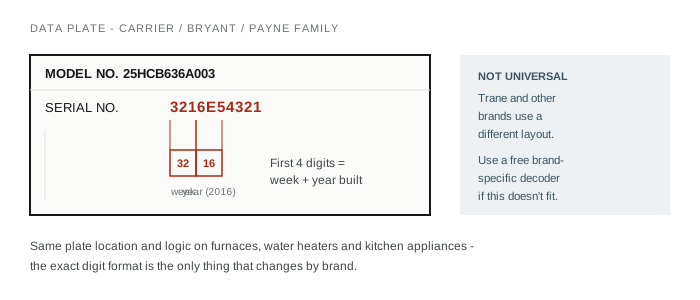
As with HVAC and water heaters, decoding a serial number into an exact date is brand-specific. Several free online appliance age finders exist and work the same way the HVAC and water heater decoders do, so you don't need to memorize every manufacturer's format.
How long do kitchen appliances actually last?
Refrigerators run 10 to 18 years, ranges and ovens 10 to 15, and dishwashers are the most debated: most consumer guides say 7 to 12 years, while the Department of Energy's own service-life data puts the average closer to 15. Use the more conservative range for planning purposes.
What condition signs matter beyond age?
Run each appliance during the showing if you can. Listen for unusual noises, check that a dishwasher actually drains, that a range's burners or elements all heat, and that a refrigerator is holding a cold temperature. Age tells you the odds; running the appliance tells you the actual condition.
Should appliance age affect your offer?
As a minor factor, not a major one. A full set of appliances all clustered near end-of-life is worth mentioning in a broader negotiation, but it belongs in the same conversation as other Price-tier findings, not treated as a standalone reason to renegotiate on its own.
Questions buyers ask
- Do appliances convey with a home sale by default?
- It depends on the contract, not a default rule, and it varies by state and by listing. Confirm directly with the listing or your agent which specific appliances are included rather than assuming.
- Is a 10-year-old dishwasher worth worrying about?
- It’s within normal range, most guides put dishwasher life at 7 to 12 years, though the Department of Energy’s own data suggests they often last longer. Worth noting, not worth negotiating over on its own.
- Where is the serial number on a refrigerator?
- Inside the fresh-food compartment, usually on a side wall near the crisper drawers. It’s a sticker or plate with a model and serial number you can photograph and decode the same way you would an HVAC unit.
- Do sellers have to disclose broken appliances?
- In most states, known material defects have to be disclosed, and a non-functioning appliance that’s included in the sale would typically qualify. It’s still worth testing each one yourself rather than relying on disclosure alone.
Related checks
Lifespan and data plate figures: Mr. Appliance, FixAppliancesFast (including Department of Energy service-life data), 24hr Supply, Beacon, BuilderBuddy, Cinch Home Services. Figures are national averages current as of September 2026.