What money is at risk when you make an offer?
Two different amounts can be on the line: earnest money, which is usually refundable if you cancel within the contract's contingency windows, and in some states a separate fee that isn't refundable at all. Which one applies depends entirely on your state.
This is the financial case for everything else on this site. A DIY walkthrough that catches an obvious problem before you write an offer doesn't just save you the cost of a professional inspection. In a due-diligence-fee state, it can save you a fee you'd lose entirely just for changing your mind after signing.
How do due diligence fees and earnest money differ?
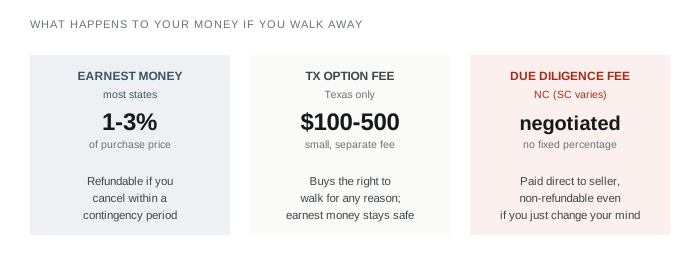
Earnest money is refundable if you back out during a contingency period the contract allows. A due diligence fee, used in North Carolina's standard contract, is paid directly to the seller and is non-refundable even if you simply change your mind, with narrow exceptions.
Which states use non-refundable due diligence fees?
North Carolina is the clearest example, built directly into its standard statewide contract. South Carolina doesn't have a universal equivalent; most South Carolina deals rely on ordinary earnest money and contingencies instead, though some local contracts add their own version.
Texas uses a different structure worth knowing as a contrast: a small, separate option fee, typically $100 to $500, buys the unrestricted right to terminate during the option period. The larger earnest money deposit stays fully refundable if you cancel within that window. It's a similar idea to North Carolina's system, pay something upfront for the right to walk away, but the dollar amount at risk is much smaller.
How long is a typical inspection period?
It varies by contract, but 7 to 10 days is common across most states. That window is exactly why the checks on this site matter before you offer, not just during it. The clock on a paid, non-refundable fee starts the moment you sign.
How do you keep your deposit if you back out?
Stay inside the timelines and contingencies your specific contract actually spells out, in writing, before you sign. What counts as protected varies enough by state and by contract that this isn't something to assume, it's something to confirm with your agent or a real estate attorney before you write an offer, not after.
Questions buyers ask
- Is earnest money refundable?
- Usually, yes, if you cancel within a contingency period the contract specifies, like financing or inspection. It stops being refundable once you’re past those windows or you back out for a reason the contract doesn’t cover.
- How much is a typical due diligence fee?
- It’s negotiated deal by deal in North Carolina, not a fixed percentage, and depends on the price of the home, the length of the due diligence period, and local market conditions. There’s no standard formula to point to.
- What happens to the due diligence fee at closing?
- It’s credited toward the buyer’s purchase price, the same way earnest money is. The difference only matters if the deal doesn’t close.
- Can a seller keep earnest money if financing falls through?
- Generally no, if a financing contingency is in the contract and the buyer acted in good faith, the earnest money is refunded. It’s a different situation than backing out for a reason the contract doesn’t protect.
Related checks
North Carolina due diligence fee mechanics: NC Real Estate Commission (NCREC) bulletins, the regulatory source for the state's standard Form 2-T contract. Earnest money and Texas option-period figures: National Association of Realtors, Opendoor, Neuhaus Realty Group. This page describes general mechanics, not legal advice for a specific contract; confirm current terms with a real estate attorney or your agent before writing an offer.