What termite evidence is visible during a showing?
Three things: mud tubes on the foundation, small pellet-like frass on sills or floors, and piles of shed wings near windows or doors. Any one of them is worth a direct question before you get further into the process.
| What you see | What it means | Typical cost | Verdict |
|---|---|---|---|
| Mud tubes on the foundation or crawl space walls | Subterranean termites traveling between soil and wood | $900 - $2,500 to treat | walk |
| Small pellet piles on window sills or floors | Drywood termite frass, pushed out through a "kick-out hole" in the wood above | $900 - $2,500 to treat | walk |
| A pile of shed, equal-length wings near a window or door | A termite swarm landed recently; active or recent colony nearby | Get an inspection before offering | walk |
| Wood that sounds hollow when tapped | Interior damage, termites or other wood-destroying insects | $300 - $2,000 cosmetic, more if structural | price |
| Seller mentions an existing termite bond | May be transferable, but confirm terms directly, don’t assume | Transfer fee or new inspection, varies | note |
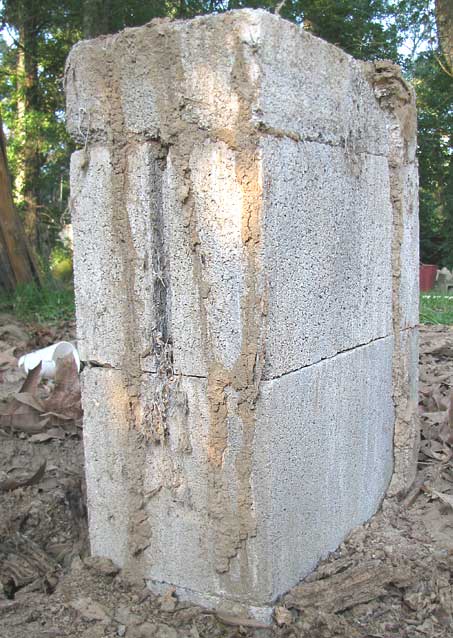
How do you test wood for damage without tools?
Tap exposed wood, a sill plate, a porch post, exterior trim, with your knuckle or a small tool and listen. Solid wood sounds solid. Damaged wood sounds hollow or papery, and in advanced cases will actually give way under light pressure.
A pocket screwdriver or the wood-rot probe from your toolkit works well here too. Gentle pressure, not a stab. Healthy wood resists. Wood that's been hollowed out from the inside offers almost no resistance at all, which is a genuinely obvious difference once you've felt it once.
Which pests cause structural damage and which are a nuisance?
Termites and carpenter ants both damage wood structurally, though differently, termites eat it for food while carpenter ants tunnel through it to nest. Most other common household pests, while unpleasant, don't threaten the structure of the house itself.
What do termite treatment and repair cost?
Treatment runs $75 to $1,750, averaging around $621, or $900 to $2,500 for a whole-house liquid barrier on a typical home. Damage repair is separate and ranges much wider, from $300 for cosmetic patching up to $15,000 or more for structural work like replacing a support beam.
Those are two different bills. Treatment stops the infestation. Repair fixes what it already ate. A house can need one, both, or neither, and it's worth getting a repair estimate specifically, not just a treatment quote, before you use a termite finding to negotiate.
When is a termite inspection required?
For conventional purchases, it's optional but strongly worth ordering regardless. For VA loans, it's mandatory in roughly 39 states based on the VA's termite probability mapping, documented on the NPMA-33 form as a condition of closing.
Questions buyers ask
- What do termite mud tubes look like?
- Pencil-width to finger-width tubes made of soil and saliva running along a foundation wall, joist, or other structural surface. Thicker "utility" tubes are sturdier and connect to an active food source; thinner "exploratory" tubes are more fragile and don’t always connect to wood.
- Does a termite bond transfer to a new owner?
- Usually yes, but not automatically or for free in every case. Some pest control companies charge a transfer fee, others require a fresh inspection before honoring it, so confirm directly with the provider rather than assuming the seller’s disclosure covers it.
- Are carpenter ants as damaging as termites?
- They cause real damage but work differently: carpenter ants tunnel through wood to nest rather than eating it for food, so the damage tends to progress more slowly than an active termite infestation, though it still needs treatment.
- Does a VA loan require a termite inspection?
- Only in about 39 states, based on whether the property falls inside the VA’s designated termite probability zones. When required, it’s documented on the NPMA-33 form and is a closing condition, not optional.
Related checks
Cost figures: Angi, HomeGuide, Homewyse and TermiteTreatmentPrice.com 2026 termite treatment and damage-repair pricing. Visual sign identification: Ehrlich, All Pest and Termite, Termite Control Care. VA loan requirements: Chase, Veterans United, Today's Homeowner, Griffin Funding, current as of the July 2025 VA rule update. Figures are national averages current as of September 2026.